
If your basement sits below the water table — as most do across Barrie and Simcoe County — a sump pump is the difference between a dry lower level and a flooded one. Between spring snowmelt, heavy summer downpours, and the clay-heavy soil that holds water against foundations around here, Barrie basements take a beating. Here’s what every homeowner should know about the humble pump doing the heaviest lifting in your home.
What Is a Sump Pump, and Why Does Your Basement Need One?
A sump pump sits in a pit (the “sump”) at the lowest point of your basement or crawl space. When groundwater collects in the pit and reaches a certain level, the pump kicks on and pushes the water up and out through a discharge line, away from your foundation. In Barrie neighbourhoods with high water tables and clay soil — where water drains slowly and pools against foundation walls — a sump pump is often the last line of defence between your finished basement and thousands of dollars in water damage.
Signs Your Sump Pump Is Failing (or That You Need One)
Watch for these red flags:
- Water stains or mineral deposits on basement walls and floors, especially after rain or spring melt
- A musty smell that won’t go away — moisture is getting in somewhere
- Your pump runs constantly or never stops — it may be undersized for the water volume, or the float switch may be stuck
- The pump vibrates excessively or makes odd noises — worn components are on their way out
- No sump pump at all — many older Barrie homes were built without one, leaving the basement defenceless against rising groundwater
- No battery backup — a pump that only works when the power is on won’t help during a storm outage, and Simcoe County sees its share of those
Pedestal vs. Submersible: Which Sump Pump Is Right for You?
Submersible pumps sit inside the pit, sealed against water. They’re quieter, handle higher volumes, and are the better fit for finished basements where noise matters. Pedestal pumps keep the motor above the pit — they’re cheaper and easier to service, but louder and less powerful. For most Simcoe County homes dealing with significant spring melt and heavy rainfall, a quality submersible pump with a battery backup is the combination we recommend.
Why Professional Sump Pump Installation Matters
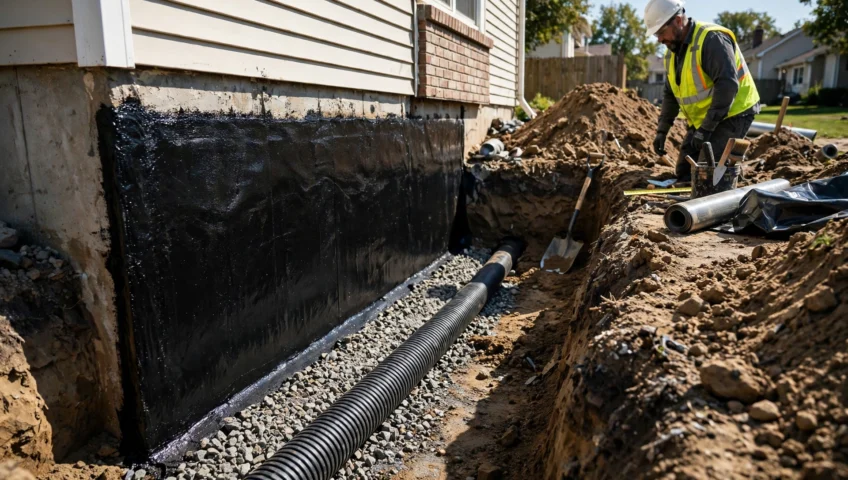
A sump pump is only as good as its installation. The pit must be sized and positioned correctly, the discharge line needs to route water well away from the foundation (and be freeze-protected for Ontario winters), and the pump capacity has to match your home’s actual water inflow. Pairing a new sump pump with proper exterior waterproofing and grading around your foundation gives your basement genuine, layered protection — not just a hope and a prayer.
Simple Sump Pump Maintenance Tips
- Test your pump each spring before the melt season: pour a bucket of water into the pit and confirm it starts, pumps, and shuts off
- Clean the pit of debris and sediment at least once a year
- Check the discharge line outside — make sure it’s clear, sloped properly, and not dumping water right back against your foundation
- Inspect the battery backup yearly and replace the battery before it fails
Don’t Wait for the Next Storm
Your sump pump only matters when you need it most — and by then, it’s too late to shop around. If your pump is aging, undersized, or you don’t have one at all, GDS Landscaping & General Contracting can assess your basement’s water situation and install a reliable system sized for Barrie conditions. We also handle exterior waterproofing and drainage for complete basement protection.
Call us at 647-767-1986 or visit gdslandscaping.ca to book a free assessment.